interventions: interference or assistance?

To talk about interventions, we must come to an understanding of what it means to intervene in general before we progress to talking about interventions in the specific context of 5. Five facilitation, as with many modalities that induce or provoke expanded states of consciousness, can be seen through the lens, or on a spectrum, of interventionism; one pole being interventionist, the other being non-interventionist (think “neutral container”).

First, some definitions:

Intervene (verb)
1 come between so as to prevent or alter a result or course of events
2 extend or occur between events

Intervention (noun)
1 interference by a country in another’s affairs
2 action taken to improve a situation, especially a medical disorder

Interfere (verb)
1 take part or intervene in an activity without invitation or necessity
2 (interfere with) prevent (a process or activity) from continuing or being carried out properly
3 (interfere with) handle or adjust (something) without permission, especially so as to cause damage

Interference (noun)
1 the action of interfering or the process of being interfered with
2 from physics: the combination of two or more electromagnetic waveforms to form a resultant wave in which the displacement is either reinforced or canceled

Looking at the above definitions, interference and intervention both have aspects (perhaps most with the former) that suggest something may happen non-consensually. Building off of the definitions of the words, I consider the contexts and orientations in which we may use them. For example, a therapeutic intervention is an action taken by a therapist that is a part of the methodology of that therapist’s approach. A clinical intervention is a part of the clinician’s approach. A shamanic intervention may look very different, since the context is very different. Within a shamanic orientation, as within a therapeutic one, there are wildly different variations; perhaps less than within a clinical one. In any case, there are identifiable actions that a practitioner with a specific orientation use with their participants.

To be 5-specific, this text will explore considerations for interventions through the lens of different “stages” of the 5 “space”. To do so, I will use terminology that I establish in another piece that speaks of samadhi and other stages that are not samadhi but lead to or are arrived at from it. Even though I allude to specific interventions, rather than focus on the orientation of a practitioner (I.e., shamanic, therapeutic, psychonautic, clinical, ceremonial, etc.), I am focussing mostly on two stages (samadhi and peri-samadhi), and the appropriateness of interventions in either.

I am also offering here both a critique of certain practices as well as components of apprenticeship. The text will be more of interest to practitioners (established or noviciate), providers (as Martin Ball would put it), aspiring clinicians—and less so for psychonauts and prospective or practised participants. As I reveal my opinions here, I realise that I risk offending some of the former. I do so emboldened by a small amount of experience in the field. I also do this so as to engage my peers and colleagues by offering another voice to our vocation.

Samadhi and peri-samadhi: a plurality of stages

“Spirit is not an object; it is radical, ever-present Subject, and thus it is not something that is going to jump out in front of you like a rock, an image, an idea, a light, a feeling, an insight, a luminous cloud, an intense vision, or a sensation of great bliss. Those are all nice, but they are all objects, which is what Spirit is not.”
– Ken Wilber

Samadhic interventions are real-time engagements with divinely arising presentations (what I term the psycho-cosmic penetralia) from the broadest recesses of memory, as explored, for example, in Death. Just as when the life force can be felt under your finger tips when filleting a de-headed fish or that breathing continues when someone is in a coma, there is life force in the body when the sense of self is fully dissolved or, at least, not actively, functionally present. That life force engages memories; those memories, I argue, can be worked with—though they don’t need to be.

I don’t mean to suggest that a practitioner should be an interventionist. I support non-interventionist approaches as well and would consider my practice to lean generously on the non-interventionist end of the spectrum. What I see as pioneering, though, is the potential for successful resolution of incomplete experiences that can arise in the fully dissolved state. Furthermore, I prefer to see this pioneering work engaged with in a collegial environment.

Numerous methods may assist in the successful completion or resolution of the presentations in this stage: trauma-informed frameworks that are body-centred (proprioceptive, sensori-motor, etc.), mind-centred (psycho-drama, parts theory, etc.), energetic (psychic surgeries, sound, cosmic contact improvisation, etc.). Again, the application of established methods as well as novel ones to the transpiring penetralia is innovatory. A well-rounded practitioner brings to their private practice many tools that, in sum, amount to the scope of their practice.

Peri-samadhic interventions (in the context of 5 facilitation) may resemble those used with other substance-induced states, whether they be shamanic, clinical, and so on. However, I only consider them beneficial if they support the lens of the design of 5: the samadhi state/stage/point/event (beyond “I”) is likely its raison d’être (or its pièce de résistance, whichever you prefer). How one arrives at or dissolves into that state is a question of approach, a narrow spectrum I have introduced as having two main qualities, surrender and submission. The interventions used pre- and post- samadhi state will largely be congruent with where the practitioner is on that spectrum (or incongruent with where they think they are). The interventions will probably also be reflective of the practitioner’s orientation (psychotherapeutic, energetic, neo-shamanic, elemental, clinical, etc.).

Part of what indicates a peri-samadhic state is that there is a sense of self. “I” is present to some degree, whether it be in the I-I, I-AM, or I-AM-THIS phase. Because there is a self-experiencing aspect to these phases (pre- or post- samadhi), the practitioner offering an intervention will need to ascertain that the participant is indeed participating. I say participate even though the presence of an “I” has a very broad range since it is composed of many categories of memory, not to mention a range that includes passive observation and actively making choices. A simple but imprecise determinant may be: is “I” having an experience?

Pathways to apprenticeship

“Initiation met poorly can be trauma. Trauma met well can be initiation.”
– Sarah Kerr

I consider interventions in the samadhi stage to be advanced and pioneering work when approached diligently, humbly, and in a guidance relationship (as defined by the Conclave). In my opinion, interventions in this stage are not pioneering or advancing anything in a collaborative manner if they are prescriptive, peremptory, templated, appropriations, or left unscrutinised. The samadhi stage is a precious, delicate state. The participant is perhaps at their most impressionable; the psyche completely exposed. Interventions here shouldn’t be used lightly or cavalierly. This is not to say that interventions by noviciates are ill-disposed. It is to say that they may be ill-suited.

When interventions here resemble those that would be common in peri-samadhic states (such as with most other substances) there may be a sort of “copycatism.” The application of interventions that were birthed within other substance work traditions, particularly of those encased in traditions and lineages (ayahuasca, peyote, mushrooms, iboga, etc.) is a poor substitute for learning about what is actually happening while there is a samadhi state—not to mention a process of continual colonisation. Applying interventions this way reveals a lack of a fuller understanding of the 5 as well as a lack of the will to let go of what we think we know. This is reflective of: a false sense of competency on the part of the practitioner; a sense that one has some sort of precocious talent or super power that comes from divine authority; or simply arrogance.

Furthermore, it is extremely difficult for anyone to act without a degree of projection. If there is an impulse for a practitioner to act/intervene at the samadhi stage, their genius aside, there is a strong element of that impulse being an egoic/personal one. A simple message to noviciates: when in doubt, lean towards refraining from offering an intervention. Then, find peers and/or mentors with whom you can shadow. This way, a trusted peer (one that can support and scrutinise you) can offer feedback around your decisions to act.

Supervision is one of the most valuable stages of a guidance relationship, and ought to be sought out. Avoiding aspects of a guidance relationship (such as shadowing, supervision, case study, and experiential giving/receiving) is to avoid gaining know-how through the vulnerability of being seen by a peer, mentor, trainer, or master-practitioner. Care-full and supportive scrutiny from peers and/or mentors advances one’s practice toward excellence much faster than “re-inventing the wheel”—often a characteristic quality of the self-approved autodidact, lone wolf, and charlatan.

Shadowing is equally valuable and, ideally, would come before supervision. To simply be a fly on the wall within a mentor’s “container” exposes a learner to a lot of information. This can then be absorbed in post-session debriefing. Here the shadower can simply take in the information without having to be involved in decision-making processes. The peer or mentor can then respond to questions regarding the decisions that were made. This is as close to explaining the nexus of intuitive and rational process as can be. It is also an opportunity for the mentor to be vulnerable, as the mentee or apprentice has the capacity to reveal blind spots. Thus, everyone is our teacher and we can all continue to be students.

Spectrum of intervention

The spectrum of intervention styles or methods is broad. Often, the interventionist pole is marked with blatant interference. Contrasted with that, the non-interventionist pole can lack in “benefit optimisation.” Somewhere in this range, a practitioner will find themselves operating. If the practitioner is allowing it to evolve, their position on the spectrum will probably move throughout the duration of their practice. It won’t move much if the practitioner is encased in or committed to a particular or inflexible way, teaching, custom, or tradition. That there isn’t a universally practised way with 5 suggests that there is a high likelihood one will see signs of continual colonisation (a system of oppression) in an offering, such as appropriation and capitalisation—often a characteristic or unchecked quality of the neo-shaman.

On that note, where a practitioner finds themselves on this spectrum will also vary according to their orientation, such as shamanic, therapeutic, clinical, psychospiritual, ceremonial, etc. For instance, a shamanic approach may use interventions constantly and automatically, whereas a clinical approach may use none if they are not requested by the participant. The question of orientation, then, intersects with the question “Who is this for?” In other words, consent and interventions are inextricably linked.

Consent

Assist (verb)
1 help (someone), typically by doing a share of the work
2 help by providing information
– [no object ] be present as a helper or spectator

Assist (noun) mainly North American
1 an act of helping

Although I have used the word “intervention” here, I quite like the word “assist.” This word, for me, more squarely/adequately answers the question “who is this for?” with “the participant” being the response. As noted above, an intervention may be offered without the consent of the participant. This then opens the door to the possibility that the practitioner is not helping the participant, but perhaps helping themselves. Helping themselves to what? If there is a protocol that is being followed, such as within a shamanic tradition or a clinical framework, it is possible that the prescribed action taken is more about procedure rather than being completely attuned to the immediacy of the participants’ experience.

Perhaps this is why the Conclave’s Best Practices are a very broad and often non-specific set of guidelines: an expansive array of possible orientations and interventions may fall under the guise of what is considered good practice—if indeed many of the considerations in this text are contemplated and integrated. It is not a manual after all, but a broad pathway to integrity.

What’s Presenting?

Presentation (noun)
1 the giving of something to someone, especially as part of a formal ceremony
the manner or style in which something is given, offered, or displayed

Now, returning to the specific nature of the potential peak experience of 5, samadhi. When there are presentations in the samadhi stage (remember, the “life force” or “cosmic penetralia” that can be perceived despite there not being an “I” present), the practitioner doesn’t necessarily know “who” or “what” is presenting. The question “who is this for?” then becomes quite tricky. It would be a facile assumption to automatically determine that the life force that is activating the body and many of its faculties and motor functions is indeed conducted by the person(a) that ingested the substance. To be direct: if the “beyond-I” phase is arrived at, that “person” is most likely not directing a presentation (if there is one).

Persona (noun)
1 the outer or assumed aspect of character

If the “I” who imbibed is not present, but there is a presentation of some other persona or penetralia, how can we ask for consent? Any prior consent would be either moot or inapplicable—unless a “carte blanche” had been given to the practitioner. The non-interventionist practitioner would insist on doing nothing no matter what was happening (with the exception of keeping the body safe), thereby avoiding possible interference, yet foregoing offering an assist. The interventionist practitioner would not hesitate to offer an assist according to whatever they thought was appropriate.

What should a practitioner absolutely not do when someone is in a full-release [samadhi] state?

In other words, what is malpractice in regards to interventions? The strict answer is that the practitioner should not be assisting/intervening in any way that was not consented to prior. The exception to this would be the full discretionary power (carte blanche) given by the participant.

The loose answer is that intuitive responses to unpredictable presentations (remember, psycho-cosmic penetralia) may not have been consented to, yet there may be a magic component to how the genius of the practitioner manifests. The “genius” is the intuitive yet informed response to uncertain and/or volatile presentations. Informed by what? A combination of practical competency and a developed intuitive sense that serve immediate needs and potentials.

Practice makes perfect, so it is said. To deny genius—an exceptional yet innate creative power or natural ability—is not the suggestion here. To practise and develop genius is to be response-able with the participant. That practicing and development is probably best done, initially or even continually, with supervision or co-witnessing of some kind.

Best practice would see that the practitioner outlines the range of possible assists that they may use for the participant to consent to—especially those that would be deemed necessary to keep the body safe. The scope of the practitioner’s practice is implicitly revealed here. Even if the carte blanche is given, the practitioner can indicate what may occur and even what is not to occur.

Conclusion

There are many considerations and factors that determine intervention styles. Metaphysical sentiments, the vocational orientation, the degree of apprenticeship, the functional skillset, and consent all intersect to result in identifying how and why a practitioner would “come between so as to prevent or alter a result or course of events”. This nexus of factors alone could apply to any trade of the healing arts. However, seeing this intersection through the lens of the peak experience with 5 makes this body of work unique. The uniqueness merits special attention and ought to result in a niche expertise.

Proficiency in these matters is a part of what turns best practices into excellent practices. Excellent practice, in my opinion, is, in part, to empower the participant as much as possible. Developing excellence takes time, no matter the knack or personal will that a practitioner possesses. May all practitioners aspire to excellence and may excellence not be an end point but an ongoing process.

Let’s keep it simple: there is an essential quality to being human and working as a guide. The guide is also human. The guide is consciousness in human form, just like the participant. Both guide and participant are manifested godheads of quintessence. We are all finding our way. What is personal or ego-derived is also divine. Let’s not forget that. Let’s not forget that the potential for great integrity comes often through learning through degrees of our messy, human selves.

We may all be a divine intervention. So may we find grace in the movement of the genius into form. May this form be as in-formed as possible. We seem to be constant(ly) in-formation, anyway.

you may
also want
to read…

full release

full release

“The two types of peak experiences are relative and absolute. Relative characterise those peak experiences in which there remains an awareness of subject and object, and which are extensions of the individual’s own experiences. They are not true mystical experiences,...

read more
©2022 chadcharles.net

a therapeutic window

“vyutthāna—the several-minutes-long process of coming out of deep meditation, of moving from fully introversive awareness to the extroversive state. It is in this vyutthāna phase that we have a golden opportunity to integrate the former with the latter. Kṣema teaches us that the way we transition out of deep meditation (samādhi) is just as important as the meditation itself.”

– Christopher Wallis on the Recognition Sutras

A Window Into A Therapeutic Methodology

In the following paragraphs I partially outline two stages of my practice, initiation (the Conclave‘s word for setting) and integration, which conjoin rather seamlessly. I”ll begin by sharing first about a theoretical underpinning to my approach to initiation. I’ll then follow by touching on how I put theory into practise via interventions. I end the chapter by describing the ways in which my clients are supported beyond the initiation and throughout until the following one. I wish to thank all the peers, colleagues, mentors, and teachers who have continually provided me with the reflections I’ve used to stay humble and sincere, as well as open, curious, and bold.


A core element of my methodology mirrors the wisdom-teaching of Rajanaka Kshemaraja, a nondual Shaiva Tantrik who wrote, in Sanskrit, the Recognition Sutras around 1000 years ago. When I say the methodology mirrors the teachings, I mean conceptually as well as practically. The conceptual and philosophical framework of the Recognition philosophy mirrors my own cosmovision and, by extension, my own understanding of what is happening with 5 (at least at the time of writing). Practically, the predominant way that I engage participants in my sessions is a sort of modern take on Sutra 19. In this Sutra, the observation of a unique moment is introduced. The word for that moment is vyutthana and it refers to a short period of time directly after a samadhi experience.


Words
To explicate vyutthana and how I consider it to be a core part of my private practice, I will rely exclusively on the translation of the Recognition Sutras by Christopher Wallis. For consistency throughout the text, I will use the numeral “5” to refer to 5-MeO-DMT (as an isolated molecule) as well as the secretion of the Sonoran Desert toad. My own rationale for this can be explored in other texts. I will also use the word “participant” to refer to those who receive what it is that I offer.

I am relying heavily on his one Sanskrit word samadhi to embark on a sharing of my process here, so I will simply use the word samadhi to reflect what I believe to be other words nearly synonymous with nondual, pure consciousness, zero-point field, satori, great spirit, the All, the Holy Kingdom, etc. (this list is by no means exhaustive). My own articulations and thoughts on what a nondual or full-release state is considered in other texts and media.

I don’t pretend to be a Sanskrit scholar whatsoever. However, it is important to note here that the word samadhi is defined in many different ways. It seems to me that for Westerners, the more common definitions and understandings of samadhic states and stages come from well before the Recognition Sutras were written, such as in the Vedic texts, including the Yoga Sutras. Since there is an entire field of study and philosophy around this experience, I won’t be discussing it here. Rather, I will simply say that the definitions of samadhi in the Recognition Sutras resonate with me more than other definitions.

I will begin by commenting on the citations from Wallis’ book.

Sutra 19 of the Recognition Sutras

“When emerging slowly from deep meditation, while still feeling its effect, contemplate the Oneness of whatever is perceived with awareness: practising this again and again, one will attain samadhi that continuously arises.”

Wallis’s interpretation of the above translation:
“vyutthāna—the several-minutes-long process of coming out of deep meditation, of moving from fully introversive awareness to the extroversive state. It is in this vyutthāna phase that we have a golden opportunity to integrate the former with the latter. Kṣema teaches us that the way we transition out of deep meditation (samādhi) is just as important as the meditation itself.

The practice described here is simple: if in the meditation you abide in your true centre even only for a few moments, then, when coming out of meditation and opening the senses to the external world, let yourself perceive whatever you perceive as a direct expression of the fundamental awareness of the center. Everything you experience, without exception, is a direct expression of the simple, sweet, quietly alive sense of being at the center. But you don’t necessarily realise this automatically[…].”

Wallis uses the English word “meditation” to replace the Sanskrit “samadhi.” Since the fully transcendent state with 5 is “even only for a few moments” (if it is “arrived” at at all), it is not long after ingesting 5 that the “extroversive state” is gradually entered into. This is where the various aspects of the sense of self begin to amalgamate into a cohesive unit again. As the self reconfigures (bringing on self-consciousness), it doesn’t “necessarily realise this automatically.”

Wallis continues:
“The moments of vyutthāna—the liminal space between samadhi and the state of being actively engaged with the world—are the golden opportunity to integrate whatever arises in the sphere of perception into the ever expanding sense of ‘I’-ness until it becomes totally all-inclusive. Then your samadhi becomes continuous, for the word samadhi really means ‘intimate union with’; in the first instance, intimate union with the Center, and in the second, through the practice given here, intimate union with the totality of reality.

In this case, the samskara of the samadhi state is what allows for the practice of integrating all that is perceived with the fundamental awareness of that state. It is precisely when you are bathing in ‘the afterglow of the sweet taste of deep meditation’ (the samskara […]) that you have the natural ability to see the mass of existent things, beings, feelings, and mental states dissolving […].”

Integrating “whatever arises in the sphere of perception” is what I call the real-time integration of the specific mental, emotional, and physical phenomena that can be observed in this “liminal space.” Presencing these phenomena (what may be called the samskaric material and other energetic imprints), can be the continuation of what the “fundamental awareness of that [transcendental] state” has revealed. I consider this material as an accretion of clues, signs, or traces that have been revealed. They have been revealed by having had all the self-identifying functions dissolve. The revelation, then, is pure and unfailing. The “medicine” has done its job. It’s a realisation.


From initiation to integration and beyond
In my private practice, I take it to be my role to help the participant realise what has been revealed (with “real eyes” of course). To do this, I use “presencing” techniques of various sorts in the “several minutes long process” after a participant has sufficiently regained enough mindfulness to be able to be guided (often verbal, sometimes physically). The guidance is simply taking stock of what has arisen at this time. Specific thoughts, emotions, and sensations are evident and yet, naturally, the actively reconfiguring, reconstituting mind is often not attending to these phenomena.

Sometimes, immediately after the extroversive state has begun, there is either a fixation with the awe of what happened, or more likely, the scrambling to determine what has just occurred. This can obscure or divert attention from what is happening in that “now.” Without being too directive, my process can “capture the rapture” for future processing. There is, admittedly, a risk to be prematurely analytical or unnecessarily “heady.” However, the aim is to bring a slight degree of mindfulness to the divine phenomena. I consider it divine because the participant is experiencing specific things that have come directly out of the dissolved state, from Source. Engaging with that material begins the practice of integration for the participant.


mindful
1 conscious or aware of something
2 focusing one’s awareness on the present moment, especially as part of a therapeutic or meditative technique


At the time of writing, there is much emphasis in popular, mainstream dialogue on being “present” and being “mindful.” For many born into and growing up in an increasingly stimulated environment, it almost goes without saying that paying attention to what is “at hand” is a good thing. Generally we are more “grounded,” clear-headed, and functional when we are attentive to what is immediate—both spatially and temporally.

To use Wallis’ words in his definition of vyutthana, mindfulness is akin to the extroversive state. This is when personal consciousness is present or active enough to be aware of and observe what is happening in the moment. For example, current thoughts (observations as well as narration), emotions (whether core or peripheral; observational or instinctive), sensations (including proprioception and interoception). It is in these moments that I assist in directing the participant’s attention to these phenomena, at least enough simply to report them.

Before this state was the introversive state, samadhi or similar. It may be a reach, but I liken this to mindlessness. Typically, mindless is associated with a lack of care or concern or—and this will be expanded on later—an activity that is so simple that it is performed without thought. Hang on to those last two words: without thought.

Is it not that samadhi is partially defined as a state absent of conscious thought?
If so, we could say that it is a sort of mindless state. What is introversive, as per Wallis, is when personal consciousness is absorbed entirely by, or dissolves into, pure consciousness. Certainly, there are many semantic quandaries here (what do we mean when we say “mind,” “consciousness,” “personal,” etc.?). There are naturally difficulties expressing these experiences as well as describing their phenomenology. It’s inevitable that we arrive at the ineffable. It’s an “ineffitability.”

The vyutthana phase begins when various senses of I, primarily coming from memory, emerge “slowly from deep meditation.” My approach emphasises Wallis’ word “slowly.” Quite often, from such a deep meditation, or samadhi state, a sense of awe and wonder can dominate the attention of the participant. We could all benefit from more “shots of awe” as Jason Silva might say; the state of wonder is more and more elusive with hyper-stimulation and so it is by no means undesirable to behold amazement. Yet, just beneath that experience of awesomeness, I take the “golden opportunity” to capture what personal awareness can perceive in those precious minutes. For whatever can be perceived is, as Wallis says, “a direct expression of the simple, sweet, quietly alive sense of being at the Centre.”

I often put it this way: after the profound, direct experience of Source, a participant could be thinking, feeling, and sensing anything. And yet, in those several minutes—vyutthana—there are specific and identifiable thoughts, feelings, and sensations that can be observed/perceived. These are the direct expressions of the Oneness—gifts from pure consciousness perceived with personal awareness. Within this phase, the zone between mindlessness and mindfulness is one of integration.

This is where the “guidance” begins. This is where I, as a guide, can be in support of what can be the “take away.” What the mind observes in the moments of samadhi (mere minutes in my experience as a witness; often eternity in the participant’s) is not unimportant, yet, as the late Rajanaka Kshemaraja would have it, the moments emerging from samadhi are equally as important as the samadhi experience itself. This is my integration work. It happens in the immediacy of the peak experience.

After the session, when the identifiable phenomena have been consolidated, the participant is left to chop the wood and haul the water. This is when their “work” begins. And so, integration is engaging with that consolidated material. And given that the material is patently personal in nature, integration is a necessarily customised process. Each individual is on a unique path. In a session, their path has just been marked by an extraordinary experience. After the session, I use tracking and coaching to support them in actualising the potential.


to track
1 follow the course or trail of (someone or something), typically in order to find them or note their location at various points
follow and note the course or progress of
• follow a particular course

to coach
prompt or urge (someone) with instructions

What can be called “coaching” and “tracking”, then, is what follows a session with me, whether in subsequent in-person meetings or, more likely, video calls. As sacred witness to what was there in both the samadhi and vyutthana phases, I am able to remind the participant about what was presented (in the time that passed while fully dissolved), what was “presenced” directly after, and why it’s important.

The tracking is together recognising and interpreting the traces, the clues, the signs, that were apparent in the session. Like a trail of breadcrumbs outward (extroversive) from the Centre, the signs of the path are everywhere. Of course, as Daniel Schmidt, creator of the Samadhi films, would say, “the path is you.” Following the breadcrumbs inward (introversive) toward the Centre is always available. And so, the trail’s markings become invaluable.

The crumbs (the material that emerged into perception from the centre) may be thematic; related to repressed memories (biological or otherwise); sublimated behaviour; related to relationship; somatic/physical; theological/philosophical/metaphysical; or any number of such things. I may coach a participant to heed the signs on the path by addressing them in very simple and direct ways. This is a creative and collaborative process, as opposed to a prescriptive one. This is one of my favourite parts of what I do. It’s personalised and customised.


Personal path considerations
Sometimes the intention of the participant is reflected in what arises in the vyutthana phase, sometimes not. Since an intention is created with a certain degree of mindfulness, an experience of mindlessness—if indeed samadhi was realised—doesn’t always yield to what the mind wanted or intended. In other words, despite the intention, the participant and I attend to what arises. Again, sometimes there is an obvious correlation, sometimes not. What can be perceived directly after an experience of the Centre is paramount, and the faith in that primacy helps detach from what the participant wanted. The trope of getting what is needed, not necessarily what was wanted, can apply here.

Sometimes the information gathered before the session is reflected in what arises in the vyutthana phase. Taking in information about what circumstances a participant has lived and how they have been responding to those circumstances is, in many cases, a key component in tracking the material that is present in a session, whether in the samadhi or vyutthana phase. The trick is, as I mention above, not to let what has been gathered prior to the session to override the immediacy and primacy of what happens in session. I allow that whatever presents in the samadhi stage or vyutthanic phase are of greatest importance. I trust the unerringly divine nature of the experience and treat it as clarity itself. I then assist in making it coherent for the participant.

Sometimes the information gathered before the session is reflected in what arises in the samadhi phase. In the samadhi stage there can be a seemingly infinite array of presentations that can only leave me to deem the experience as utterly unpredictable. I believe this unpredictability is due to the entire human condition being available: anything a human could ever encounter (in the past or future) is possible to be presented here because the whole of consciousness is “channeled” via the body without the filter of the self-identifying parts of the mind. Much like a fetus presents in a certain way in relation to the cervix as it comes forth from the womb, I regard the participant’s body presentation (and any other phenomena) as an expression of human experience that may be biographical, perinatal, ancestral, or transpersonal in nature (bascially, a COEX system). This is an entire field of focus in and of itself and so I’ll leave further explorations to be expounded in other texts elsewhere.


5-MeO-DMT in a therapeutic context: a theramony
While the definition of a therapeutic orientation to 5-assisted work is up for grabs, my therapeutic approach is the combination of 1) the assessment of the individual’s life story, 2) the real-time integration in the session, and 3) tracking and coaching. By tracking the information gathered in the vyutthana stage, the participant is coached to take that and apply it. The application of that information is the “work”—the actualisation of the realisation. The work can be done with continued guidance sessions with me or not. Participants can lean on me as a tracker: I help a participant to see what’s on their path, coherently piecing together what the session revealed with what may be an optimal way to move forward.

I believe that each one of us is a wayfinder. This belief results in a process that empowers the tracker in us all. I use each session with 5 as an initiatory starting point from which a pattern can be seen to emerge. Whether someone is having their first session with 5 or their fifteenth, there will always be something to track. Naturally, most people become great trackers for themselves over time. At some point, clients seek me out less and less as they become more and more skilled at following the traces—the guidance that is everywhere.


A psychedelic guide
I am a guide, yes. I offer guidance. However, the guidance I offer with 5 isn’t about navigating multidimensional or transpersonal spaces in the session. The guidance is about navigating this human life by way of extracting what has sprung from the Centre and transmuting it into excellent, optimal living.

The word “heaven” is often depicted as being above the sky. The sky is above us. It’s vertical. Similarly, when we turn our attention to what we’re standing on, we’re aware of the ground. And it’s below us. There’s a continuation of that verticality. Now, when we look across from us with these human eyes, we see anything else that is before us as also on this ground. It’s horizontal. Each one of us, as long as our personal consciousness inhabits this Earth-suit, is an axis, a point at which these lines connect. And as we move about this life, we find optimal ways to “align” ourselves, vertically and horizontally. Sometimes we are “off-track.”

Re-alignment is a part of the constant course-correction of living. Guideposts help one stay on track, staying centred—”connected,” as it were—yet also grounded. After all, this human life is happening—for now—horizontally, on the ground, on Earth.


ungrounded
not electrically grounded: an ungrounded screen can act as an antenna

down-to-earth
with no illusions or pretensions; practical and realistic


The peak experience with 5—some may say a type of samadhi—may be the most ungrounded experience a human can have. Since the concepts of ground and of human are completely “up in the air,” there can be a cosmic, stellar, dreamy quality to the transcendent event.
As a guide, I help ground the experience.
As a guide, I help to bring heaven down-to-earth.


you may
also want
to read…

full release

full release

“The two types of peak experiences are relative and absolute. Relative characterise those peak experiences in which there remains an awareness of subject and object, and which are extensions of the individual’s own experiences. They are not true mystical experiences,...

read more

The Centre of the Torus

“The torus is a multidimensional geometric figure that lies at the heart of all space‑time.”
– Richard Rudd

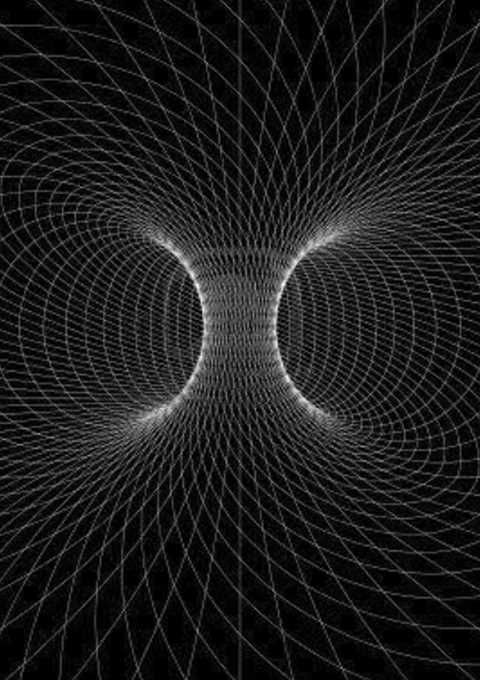
The torus is a helpful metaphor for thinking about the movement of primordial consciousness and where our personal consciousness can be seen to be positioned within it. The symbol depicts expansion and contraction within the same dynamic system: outward flow, inward flow, and a centre through which both movements pass. As a symbolic model of consciousness, the torus helps illustrate the relationship between the many forms of experience and what appears when the structure of identity itself disappears. The full disappearance of personal consciousness or identity structure (the subject‑object relationship) corresponds to the centre of the torus.

Noetic: relating to mental activity or the intellect.
Noetic quality: the felt sense of direct knowing often reported in mystical experience.

The language surrounding these encounters therefore carries a strong noetic quality. Something feels known even when it cannot be fully described. The best language does not capture the event directly but points toward it.

In the context of 5‑MeO‑DMT experiences, many reports point toward a decisive transition point — a final threshold at which the ordinary relationship of subject and object no longer organizes experience. Prior to that threshold there may be extraordinary, profound, and often indescribable phenomena. Yet these remain experiences that can still be reported because the appearance or function of personal consciousness remains active.

There are multiple shifts in the subject–object relationship, experienced as successive thresholds. When the final threshold is crossed — when the positioning of the self‑identifier arrives at the centre of the torus — the organizing standpoint of the experiencer disappears. What ceases is not merely ordinary thinking or perception but the structure of identity‑consciousness itself. Descriptions that follow such an event are necessarily retrospective. Language returns only after the re-oriented experiencer has emerged from the centre. For this reason attempts to describe what lies beyond the final threshold inevitably rely on metaphor, analogy, and approximation.

White‑out and Void

Often, I hear reports such as: “I had a whiteout and I don’t remember anything.” So, what does that mean? Let’s look at these definitions and then some description from nondual thinker Richard Rudd.

White‑out: a loss of visual field often preceding loss of consciousness.
Blackout: a temporary loss of consciousness.

“At one end of the torus is the black hole, representing the yin pole that contracts and enfolds. At the other end is the white hole, the yang pole that expands and releases.”
– Richard Rudd

Within 5‑MeO‑DMT sessions two recurring phenomenological patterns often appear as individuals approach the final threshold: what many describe as a white‑out and what many others describe as the void.

The void or blackout is frequently associated with stillness, nothingness, absence, silence, emptiness, or remoteness. The white‑out is often described in terms of fullness, everythingness, radiant intensity, plenitude, or totality. These descriptions vary widely, but both patterns appear near the limits of describable experience. Black and white function here as a kind of prime duality: opposite poles that nevertheless belong to the same field. Poles so close that only one thing lies between them: the centre. 

From the perspective of the torus metaphor these poles can be understood as different phenomenological approaches to the same centre. The approaches do not necessarily represent two different ultimate states but rather two ways the dissolution of personal identity may be experienced as the threshold is approached.

Importantly everything that can be described — luminous, ecstatic, empty, terrifying, or silent — still belongs to the domain of experience. The threshold itself is marked by the disappearance of the standpoint from which experience is owned or narrated.

This is where ‘out’ becomes a clue. White and black can be viewed as a binary—simplistic perhaps, but distillations of duality itself. In the torus figure, the ‘out’ is the centre. As the position of the self‑identifier moves closer to that centre, personal experience may feel like an implosion or an explosion. Whether personal consciousness encounters white or black, it is near the centre—perhaps as near as it can get. The sense of “I” is almost out. Using the definitions above, personal consciousness is absent: out of consciousness, unconscious.

Personal and Impersonal Domains

Ecstasy: an emotional or religious trance‑like state originally describing mystical self‑transcendence. Etymology: ekstatsis (Greek)
Ekstasis: “standing outside oneself.”

Experiences that occur prior to and after the threshold remain personal, even when they are extraordinarily expansive. They are interpreted, remembered, and integrated by a person. Sensations, emotions, visions, or insights may be profound or simple. In any case they still arise within the structure of subjectivity.

What is at the centre of the torus corresponds to what might be called an impersonal domain. Here the usual polarity between subject and object no longer operates. Because no vantage point remains from which to observe or narrate, the event itself cannot be described directly.

What can be described are the penumbral phenomena — the experiences that occur as identity begins to dissolve and again as it re‑forms afterward.

The Centre of the Torus

“The torus unites centrifugal and centripetal forces, bringing implosive and explosive dynamics into the same system.”
– Richard Rudd

The torus image helps visualize the relationship between these phenomena. The spectrum of experiences — luminous, empty, ecstatic, terrifying, or silent — can be understood as movements along the field surrounding the centre. The centre itself is not another experience within that spectrum. It represents the disappearance of the structure that would make experience personal and relative.

From this perspective white‑out and void are not opposites competing for primacy. They are phenomenological entry points that may appear as the boundary of identity begins to dissolve.

The torus therefore becomes less a literal map of ultimate reality and more a symbolic representation of a dynamic process: differentiation moving outward, return moving inward, and a centre where the polarity between subject and object collapses.

Difficult Encounters with the Void

“Falling into the Pit of the Void… entails an authentic and irreversible insight into Emptiness and No Self. What makes it problematic is that the person interprets it as a bad trip.”
– Shinzen Young

Encounters near the boundary of identity dissolution are not always interpreted in the same way. Experiences that resemble the void can be interpreted as terrifying, destabilizing, or nihilistic if they are understood as loss rather than release. In contrast, the same territory may be interpreted as profound freedom.

The variation reflects how experiences near the threshold are filtered through the structures of interpretation that are inherent and relative to the individual. Understandably, the one who has an experience will judge that experience, often preferring qualities that feel desirable while resisting those that feel threatening.

Describing the Indescribable

Attempts to describe such events inevitably remain partial. Language functions after the fact. Yet the persistence of similar reports across individuals suggests that the boundary between personal consciousness and what lies beyond it may have recognizable features.

“The two types of peak experiences are relative and absolute… Absolute peak experiences are timeless, spaceless, and characterized by unity in which subject and object become one.”
– Alan Hefner

The value of metaphors such as the torus lies not in proving what the absolute is, but in helping us think about how the transition from personal experience to the disappearance of identity—and vice versa—might occur.

In this sense the most reliable descriptions concern what precedes and follows the threshold rather than the threshold itself. Those descriptions are then perceived and interpreted in relative ways.

Seen through the image of the torus, the reports of white-out and void begin to make more sense. Both a white-out and a blackout can be experienced as the boundary of the separate self begins to dissolve. The mind might prefer one and resist the other, interpreting the experience through the familiar language of gain and loss, pleasure and terror. But the torus suggests something simple: that both movements belong to the same process. Expansion and contraction, light and dark, fullness and emptiness all curve toward the same centre. What lies there cannot be described from the outside of it. Yet the recurring testimony of those who approach it and return from it suggests that there is one source.

In the torus, there is one centre. Duality flows into and out of this One.

Ekstasis is to be out of oneself.

Into the One; out of oneself. 

There are many selves.

There is One Self. 

you may
also want
to read…

full release

full release

“The two types of peak experiences are relative and absolute. Relative characterise those peak experiences in which there remains an awareness of subject and object, and which are extensions of the individual’s own experiences. They are not true mystical experiences,...

read more

Life As Ceremony

“Pain comes with life, closely accompanied by our “solutions” to it, most of which are all about getting away from it, whether through alcoholic, narcotic, erotic, intellectual, material, egoistical, or spiritual means. The fact that these “solutions,” despite their analgesic/anesthetic capacity, only end up catalyzing more pain usually does little to stop us from pursuing them…. Not all spiritual bypassing so blatantly avoids pain; the dance of avoidance can be done with great subtlety.”

– Robert Masters

A common question for participants and practitioners alike is: how often should I be taking this? At what point does use turn into abuse?

Of course, this question is not unique to this substance.

However, with psychoactive substances in particular, one first might look at why one is taking it in the first place. Then, one looks at what is being gleaned from the experience. Finally, one may look at how that is being absorbed and then applied and practised.

I like to think that the what is a sort of guidance or lesson. When I imagine receiving a lesson, I think of a simple scenario like the conventional classroom. In the classroom there is material I am being shown or given—a lesson. In other words, there is information that I am ‘downloading’ via a transmission or demonstration. I then take that transmission out of the classroom. I can begin to contemplate what has been offered. I can then begin to apply the material in my life outside of the classroom. True, it may be helpful to have a tutor or to enrol in some sort of study group, which would offer me concentrated ways to practise that which has been learned.

“Alone, one can go fast. Together, we can go far.”

In another scenario, I could also leave that particular classroom and go immediately to the next one. In the subsequent ‘lesson’, the guiding force—the teacher—might be counting on me to have integrated or at least practised the material from the last class, and reasonably begins the class building on the material already transmitted. Chances are, one lesson builds on the last. Thus, if I went straight into the next class without having practised what I received in the previous one—having done my ‘homework’—there may be a gap or soft foundation onto which the new material tries to rest.

I ask those who come to this question of “how often?”: have you done your homework? Are you content that you have absorbed what was offered from the last lesson? Has the material that was consumed been fully digested? Or is it half-chewed, needing time to settle, or maybe even needing some helpful enzymes?

If you’re not satisfied that the class material has been integrated, what’s the rush to go to the next lesson? Or, if you’re not sure, could there be another set of eyes that could reflect back to you what they do (or do not) see? If not, what expectations might you be harbouring for the next class? If I were to go so far as to label this information as ‘life lessons’, is it not life that occupies much of the time between classes? Sure, life itself is a classroom, as the adage goes. The lessons are all around us at all times and there are countless opportunities to practise. The life-as-ceremony becomes a maxim in ‘spiritual’ circles. And we use this substance in a ceremony. Putting this altogether, I am reminded of something a wise woman told me once (in one of my own classes): the ceremony begins when the ceremony ends.


you may
also want
to read…

full release

full release

“The two types of peak experiences are relative and absolute. Relative characterise those peak experiences in which there remains an awareness of subject and object, and which are extensions of the individual’s own experiences. They are not true mystical experiences,...

read more

intention vs. attention

To have the intention to improve the quality of our life experience or to explore consciousness is a gift and is noble. With 5, one cannot programme the experience entirely. One can, however, allow the experience to be what it is, and learn from it by noticing how we respond to it. A conscientious practitioner can greatly assist with that.


intention: 1) a thing intended; an aim or plan; the action or fact of intending; a person’s plans; 2) [medicine] the healing process of a wound

attention: 1) notice taken of someone or something

Attending to what is present is different than intending something to happen.

The first time I inhaled a pipe filled with a likely huge amount of bufo alvarius secretion, I had no intention. I actually had no reason to take that inhale. I didn’t even know what it was. It was offered to me haphazardly and without even asking myself why I would do this, I said yes. I trusted something. I still don’t know what it was that I trusted.

For some reason there was very little resistance in my system and my experience—a full release as I came to understand it— was everything that one would prefer it to be. With my friend who was present and with the provider, I laughed and danced and revelled in the glory of all that we are.

It doesn’t happen like that all the time.

Many are not so fortunate. In this psychedelic renaissance, many use ‘consciousness medicines’—as Françoise Bourzat would call them—without even knowing what they’re using. Weekly, I hear from people who have had difficult experiences with 5/bufo, typically because they had no idea what they were getting themselves into (and/or the practitioner did not create a safe, secure, solid, sacred container). Even so, does one have to have a reason to use them?

conscious: 1) aware of and responding to one’s surroundings; 2) having knowledge of something; 3) [of an action or feeling] deliberate and intentional;
—from Latin conscius ‘knowing with others or in oneself’

Half a year or so after my first experience, the idea came to me to have another session. This time I asked myself why. I had no ‘why’ the first time. I couldn’t imagine how there may be more of singularity to explore. I did wonder, however, how I may get more out of the personal development work that would follow.

Because from that first time, I began to love myself. I immediately accepted myself more than I ever had. More than an act, I was in acceptance, in the love. I was more aware that I had not been accepting myself—and of how that affected my relations with others. I appreciated this (and the grief it brought) and thought that there may be more aspects of myself that I could draw my attention to.

An intention to simply pay attention.

consciousness: a person’s awareness or perception of something ; the fact of awareness by the mind of itself and the world

aware: having knowledge or perception of a situation or fact; concerned and well informed about a particular situation or development

When consciousness expands, what one is aware of encompasses ‘more’. The content of that ‘more’ is often not programmable or foreseeable. Stan Grof has called the expanded consciousness one experiences with breathwork a non-specific state. Given the vast array of experiences that can be had with 5/bufo, it would be safe to say that 5/bufo is also a non-specific medicine. I do believe that it has a specific function: to reveal that very impersonal realm of oneness. To arrive at that state, the personal must be relinquished.

As individual consciousness expands to the point/diffusion of a non-dual state, any specific desire the person has had is incorporated in the All. If an intention were to be still identified, that would mean that there’s still an identifier.

Who creates intention?
The self-identifier.
The mind.
The self.
The I.

How do you make God laugh? Tell them your plans.

resist: (verb) withstand the action or effect of; try to prevent by action or argument

resist: (noun) a resistant substance applied as a coating to protect a surface during a process

The very thing that formulates intention is the very thing that, in the 5 experience, is being asked to dissolve: the mind. Attachment to the mind’s intention—its aim, its plan—is yet another thread that needs to be let go of in order for the mind to surrender to what is being asked of it (to let go). When the attachment to what mind wants is being held on to, the energy of that hold can be experienced as resistance. So, we must let go of the reason ‘why’ we are even there, at that moment, bringing this substance into our body. As Rak Razam might put it, we must allow for the “heavenly permissions and protocols” to prevail. Perhaps even despite our intentions.

The peak experience (or, full release) is when attention is diffused to the extent that no specific point of focus is discernable or possible. Once the peak experience has passed, though, what one can do is direct attention to what is happening n the moment. Somatically, affectively, and cognitively there are signs, hints, and a trail of fresh tracks that would lead us back to the oceanic fullness of that One.

Pay attention (noticing), be with (presencing), and then respond (as opposed to reacting).

The grace in me after my first experience was that I had, thanks to my background in conscious connected breathwork, the wherewithal to attend to my experience by noticing what was going on for me. I looked to the ‘what’ as opposed to the ‘why’.

To have the intention to improve the quality of our life experience or to explore consciousness is a gift and is noble. One cannot programme the 5/bufo experience entirely. One can, however, allow the experience to be what it is, and learn from it by noticing how we respond to it. A conscientious practitioner can greatly assist with that.

Then, what is their intention?


you may
also want
to read…

full release

full release

“The two types of peak experiences are relative and absolute. Relative characterise those peak experiences in which there remains an awareness of subject and object, and which are extensions of the individual’s own experiences. They are not true mystical experiences,...

read more